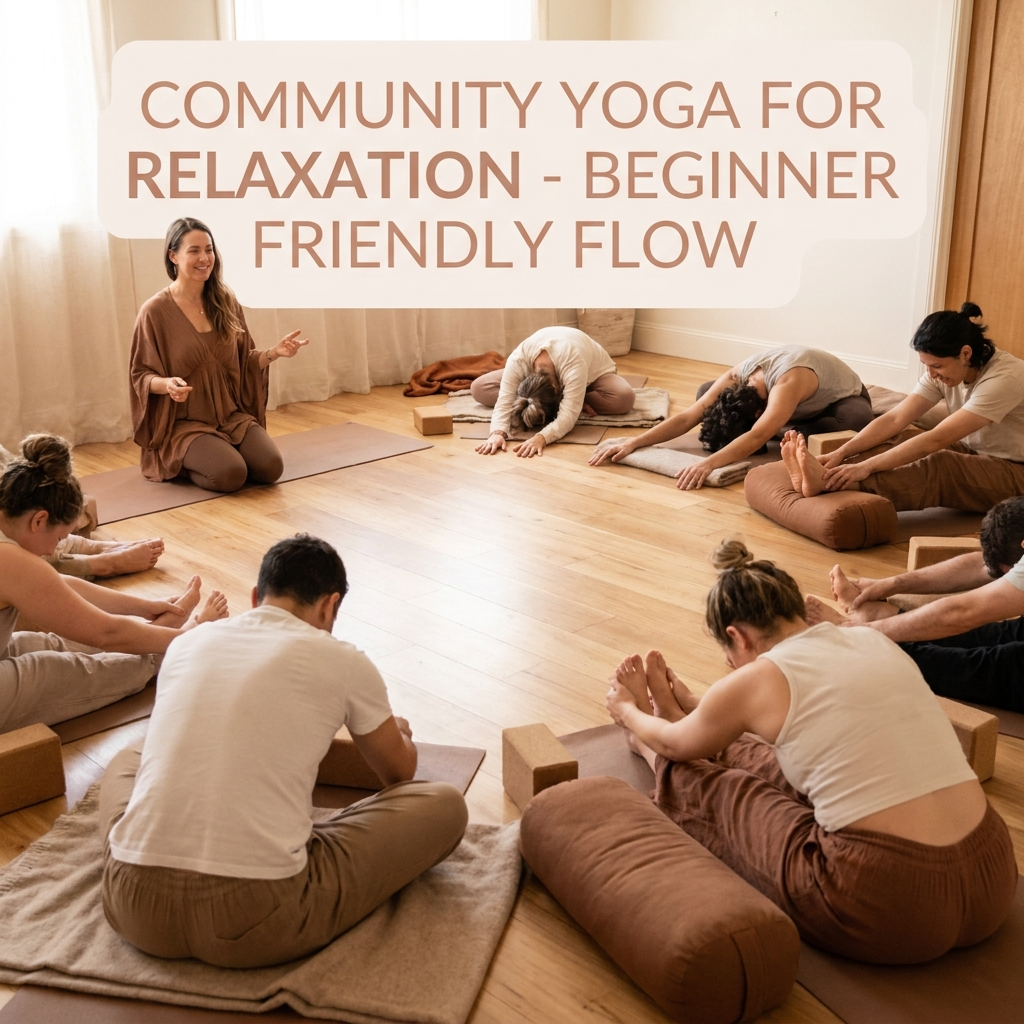
Stress can settle into the body in quiet ways: tight shoulders, shallow breathing, a clenched jaw, or the feeling that your mind is moving faster than the rest of you. A beginner-friendly yoga flow for relaxation gives you a simple way to slow down without needing fancy poses, extreme flexibility, or a full hour of free time. Whether you are new to yoga or returning after a break, a gentle stress relief practice can help you reconnect with your breath, soften tension, and feel more grounded in your day.
Start With the Breath
Before moving through any poses, begin by noticing your breath. Sit comfortably or lie on your back with one hand on your belly and one hand on your chest. Inhale slowly through your nose, letting your belly rise. Exhale gently and allow your shoulders to soften.
This simple breathing practice signals to your nervous system that it is safe to slow down. For beginners, this is often the most important part of relaxation yoga. You are not trying to “perform” calm. You are creating the conditions for calm to arrive.
Choose Gentle, Grounding Poses
A stress relief yoga flow does not need to be complicated. Start with poses that feel steady and supportive, such as Child’s Pose, Cat-Cow, Seated Forward Fold, and Reclined Twist. These shapes encourage the spine to move gently while helping the body release stored tension.
Move slowly and give yourself permission to adjust. If your hips feel tight, place a blanket under your knees. If your back feels sensitive, keep your knees bent. Beginner yoga is not about forcing your body into a shape. It is about finding a version of each pose that helps you feel present and supported.
Let the Pace Be Slow
Relaxation yoga works best when you are not rushing from one posture to the next. Try staying in each pose for several breaths. Notice where your body naturally softens as you exhale. If your mind wanders, gently return your attention to the feeling of your breath or the support of the floor beneath you.
A slower pace also makes yoga more accessible for beginners. You have time to understand the pose, listen to your body, and build confidence without pressure.
End With Stillness
Always leave space at the end of your practice for rest. Savasana, or final resting pose, may look simple, but it is where your body integrates the benefits of the flow. Lie on your back, let your feet relax outward, and allow your arms to rest by your sides.
Even three to five minutes of stillness can help your body shift out of stress mode and into a calmer state. This closing pause is a reminder that rest is not something you have to earn.
If you are ready to feel more relaxed, grounded, and at home in your body, try a beginner-friendly yoga class designed for stress relief. Join us for a gentle practice in Colorado Springs and give yourself the time and space to breathe, move, and reset.