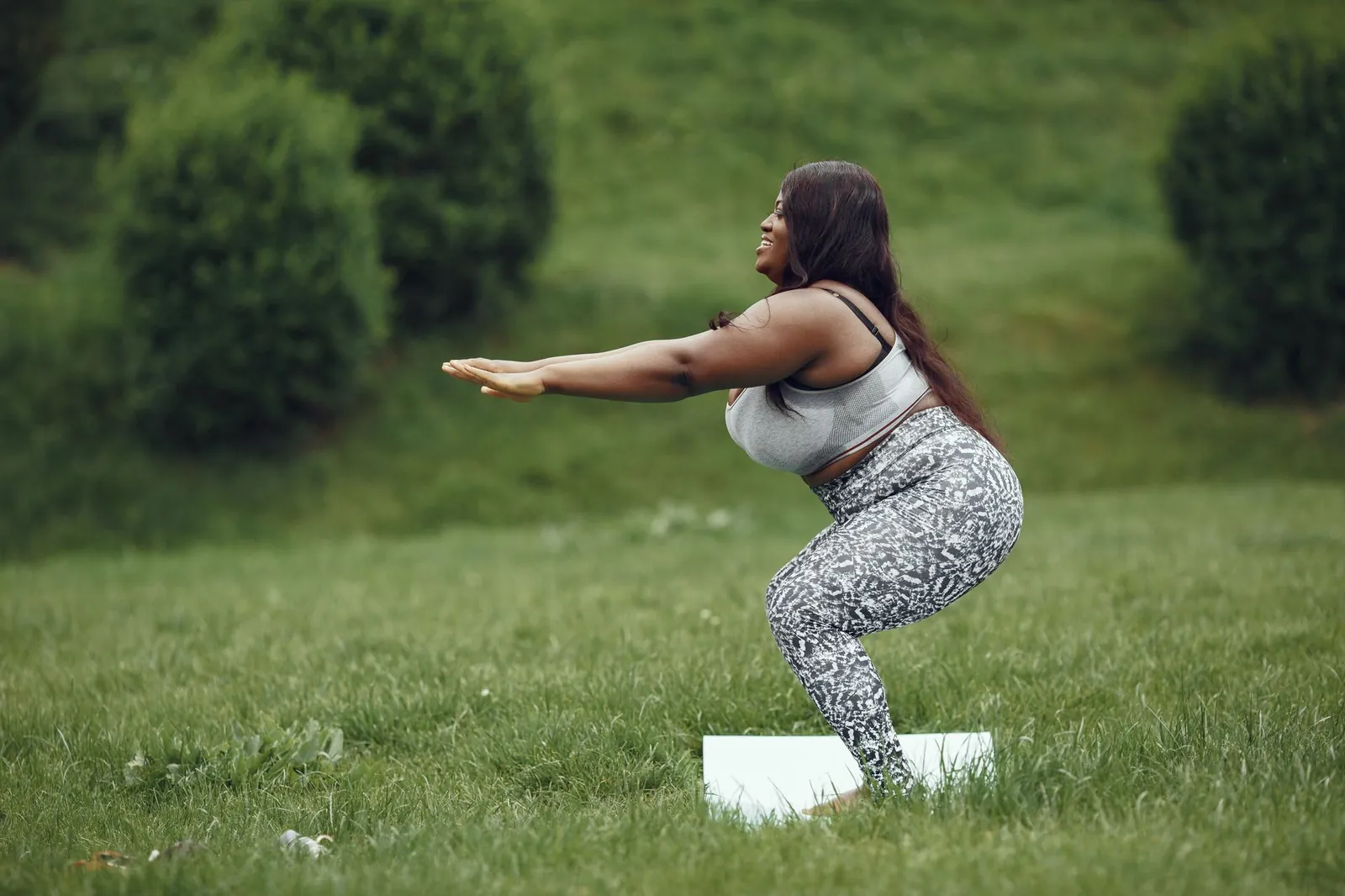
There is a version of Malasana most practitioners never encounter — the one where you simply sit into it without agenda, without chasing a deeper fold, without treating it as a warm-up or a reset. In that version, the pose does something unexpected: it quietly becomes the most useful thing you do all day.
It meets your body where it already lives
Garland Pose requires no special flexibility to begin. The requirement is almost embarrassingly simple: be human. The hips were designed to sit here, in a deep squat, and for most of history that is exactly where they spent their time. Modern chairs removed that from daily life. Malasana puts it back, without equipment, without preparation, without needing to be good at yoga first.
It does corrective work without you noticing
The ankles dorsiflex, the inner groin releases, the outer hips broaden. You feel looser afterward, and most people attribute that to stretching. The more accurate description is that Malasana undoes something the rest of the day put in place. A daily squat hold resets the default posture of a body that has been sitting at screens, driving, and collapsing into couches. The correction happens passively, as a consequence of the position itself.
It gives your digestion an assist
The compression of the lower belly against the thighs, combined with the gentle forward lean, increases blood flow to the intestines. Ayurveda has described this effect for centuries. The anatomical mechanism is straightforward enough: gravity and pressure working with the body's natural rhythms rather than against them. Many practitioners report more comfortable digestion on days that include a few minutes in Malasana, even without changing anything else.
It anchors you in your feet
Most yoga poses lift you out of your relationship with the ground. Malasana puts you firmly back in it. Both feet carry weight, the arches engage, the toes spread wide and press into the mat. There is something grounding about the geometry of the pose that is easy to overlook because it is so basic. But for practitioners who spend most of their day disconnected from the sensation of their own feet, this alone makes the pose worth revisiting.
It is impossible to do wrong in a way that matters
With most postures, there is a correct shape to chase. Malasana resists that perfectionism. A higher pelvis is fine. A flat heel is not required. Blocks under the heels are not a concession but a legitimate variation that has been part of the pose for as long as the pose has existed. The variation becomes the practice, and the practice becomes daily.
Bring Malasana into your morning, even for three breaths, and let the hips remember what they already know.