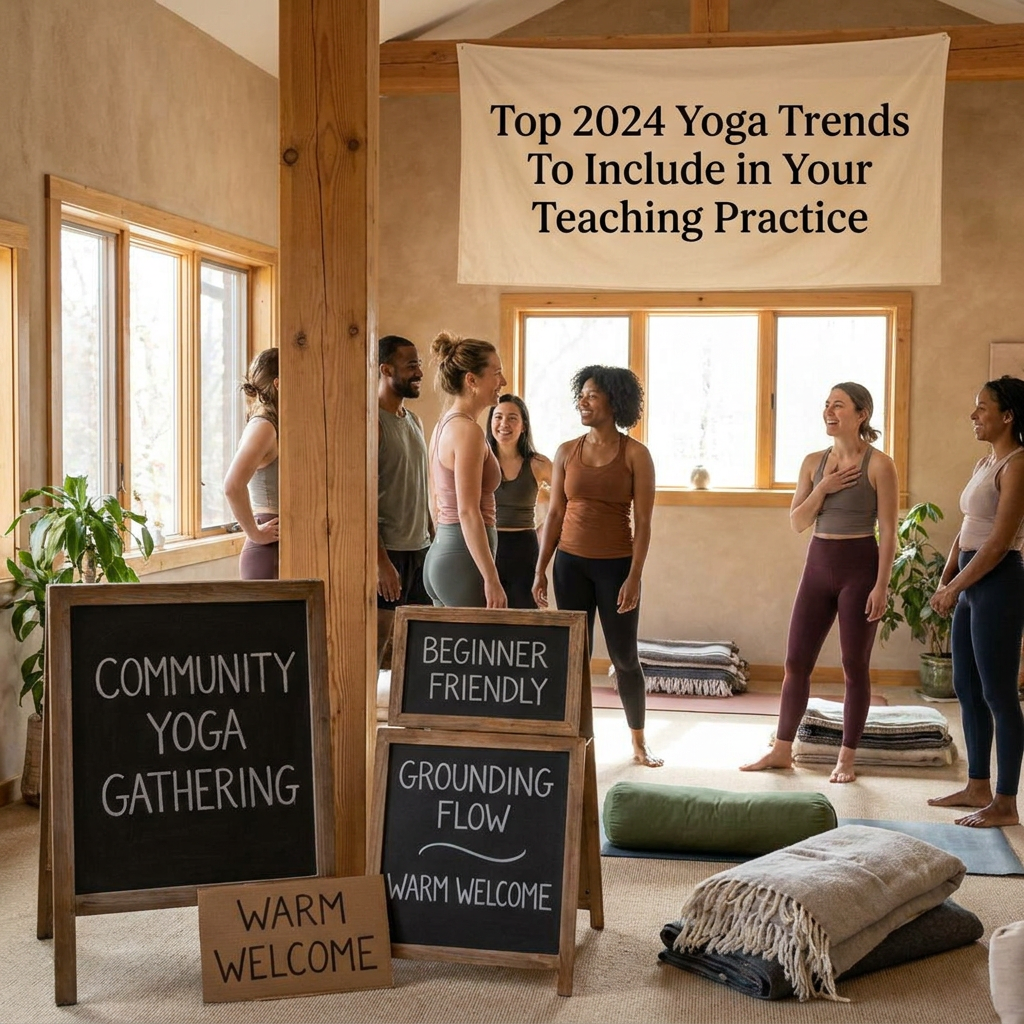
Your students feel it before you name it: a quiet restlessness, a sense that the old studio rhythms aren't quite landing the way they used to. That's because the practice itself is shifting. The yoga mat in 2024 isn't just a place to stretch and breathe anymore — it's becoming a laboratory for nervous system regulation, community healing, and deeply personalized movement. Whether you teach in a Colorado Springs studio or on a Zoom screen, these five trends can reshape not just what you offer, but how your students feel when they roll up their mat.
Regulation-first sequencing might be the biggest shift. More teachers are moving away from purely aesthetic flows and toward practices that consciously move the nervous system from sympathetic (fight-or-flight) to ventral vagal (rest-and-digest). Instead of starting with Sun A's, try opening with two minutes of supine diaphragmatic breathing, then slow cat-cow with an exhale emphasis. Students finish feeling grounded rather than wired — and in a world of constant notifications, that's why they keep coming back.
Trauma-informed language is becoming table stakes, not a specialty certification. In 2024, students expect cues that offer choice over command. Replace "press into your hands and lift your hips" with "when you're ready, you can begin to press into your hands." Small shifts in agency — using "you can" or "option to" instead of imperatives — create a container where every body feels safe. This matters especially for beginners who may carry past injury or anxiety into the room.
Restorative and yin are breaking out of the evening-class ghetto. Teachers are threading slow, sustained holds into vinyasa classes — think a three-minute supported fish after backbends or a yin heart-opener before savasana. The trend is toward integration rather than separation: one practice that builds heat, then cools with intention. Studios in Colorado Springs are already seeing higher retention in mixed-format classes versus pure power-only offerings.
Accessible yoga for bigger bodies and older adults is no longer an afterthought. Cues like "hug your thighs toward your belly" assume a body type not every student has. Instead, teachers are learning to cue around props — "bring a block under your sitting bones in forward fold" — and offering multiple entry points for every pose. Chair yoga is evolving, too; it's no longer just seniors in a circle, but athletes in recovery and new parents rebuilding core strength.
Finally, cohort-based and community-centered formats are replacing the drop-in model. Students want to practice with the same faces week after week. Consider offering a six-week "Nervous System Reset" series or a monthly new-moon restorative circle. When students feel known by their teacher and their peers, they stay. And retention, not one-off class pass sales, is what sustains a teaching practice.
Here's your one move for this week: pick one of these five trends and weave it into your next class. Maybe it's swapping one command for a choice-based cue. Maybe it's adding a three-minute hold after your peak pose. Try it, then watch your students' faces as they leave the room. They'll tell you everything you need to know.