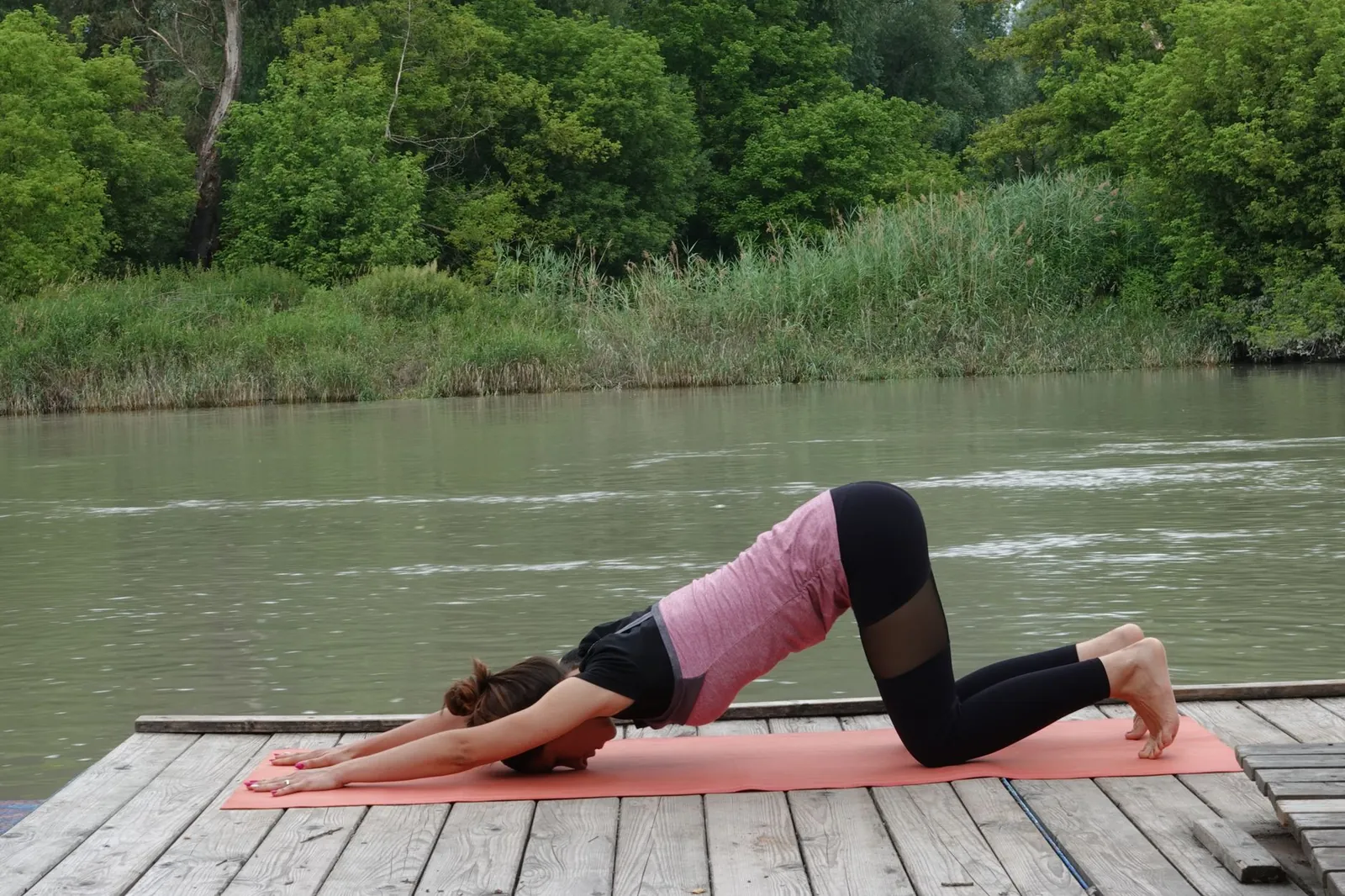
There's a moment in every home practice where the sequence stops feeling like a plan and starts feeling like a conversation. You're moving from cat-cow into child's pose, your breath changes tempo, and suddenly the flow isn't something you're following — it's something you're having. Building sequences with that kind of life in them is less about picking poses and more about how you stitch them together so the body, the breath, and the timing all line up. AI tools have made this easier: apps built on real-time camera tracking can now watch your form and give a spoken nudge the moment your shoulders creep toward your ears, so the cues you'd otherwise need a teacher for arrive in the middle of your living room flow.
Start with the arc, not the pose list. A sequence has a shape — settle, build, peak, settle again. If you begin by picking ten poses you like, you'll spend the whole practice wondering why the energy jumps around. Decide first what the hour is for: lower-back release after a long day, a sweaty hour that ends in a long savasana, a ten-minute morning window that opens the chest and hips. Once the arc is clear, every pose either serves it or it gets cut.
Group by family, and by feel. A common mistake is sequencing by name — a warrior, a balance, a backbend — as if those were the same kind of demand. They aren't. A better rule is to stay with what the previous pose already opened. If you just spent four rounds in a low lunge heating the psoas, the next step should keep that heat moving, not throw the body into a forward fold from cold. Real-time form-feedback apps make this kind of sequencing honest: if your alignment is off in the second pose of a chain, the camera will tell you, and you'll learn fast which transitions actually flow and which were wishful editing.
Let the breath pick the time. Most home practitioners undercount the length a pose wants. Holding for three breaths is a tempo that belongs in a faster class; for a deep hip opening, it's a tease. A useful trick: time the peak pose with a clear physical event — the moment your lower back releases, the moment your breath deepens by one notch — and let the cue be the sensation, not the clock. This is the part AI guidance gets right when it's good: it watches you, not the timer.
Plan the floor. Ending well is harder than starting well. The last three poses of any sequence are what your body remembers on the way out the door. Choose them on purpose — usually a neutral supine shape, a supported twist, and a long savasana with a folded blanket under the knees if anything in the session touched the lower back.
The fastest way to get better at this is to build the sequence, then practice it once and notice where it breaks. A single run-through, honestly logged, teaches more than an hour of planning. The free online sequence builder makes it easy to lay out a full flow, save the version that actually worked, and come back to it next week — already one step closer to a practice that runs itself.
For a new sequence every month plus the thinking behind each one, the newsletters page collects them as they're published.